S&P 500 Investment Calculator
Estimate how a lump sum or monthly investment in the S&P 500 could grow over time. Adjust your return rate, inflation, contribution schedule, and timeline, then review a year-by-year breakdown.
Why This Calculator Is Different
Clear assumptions, flexible scenarios, easy comparison
Many calculators only show one final number. This tool makes assumptions explicit and shows year-by-year output, so you can verify and compare "what-if" cases before making decisions.
01
Transparent Assumptions
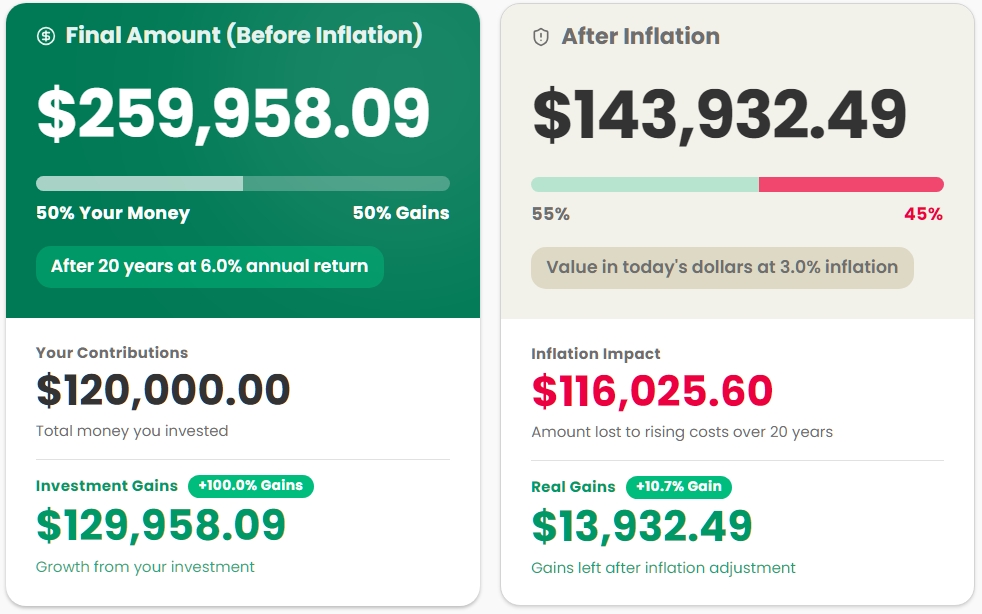
See exactly what drives the result: starting amount, recurring contributions, expected return, inflation, and time horizon. No hidden inputs or black-box logic.
02
Multiple Goal Modes
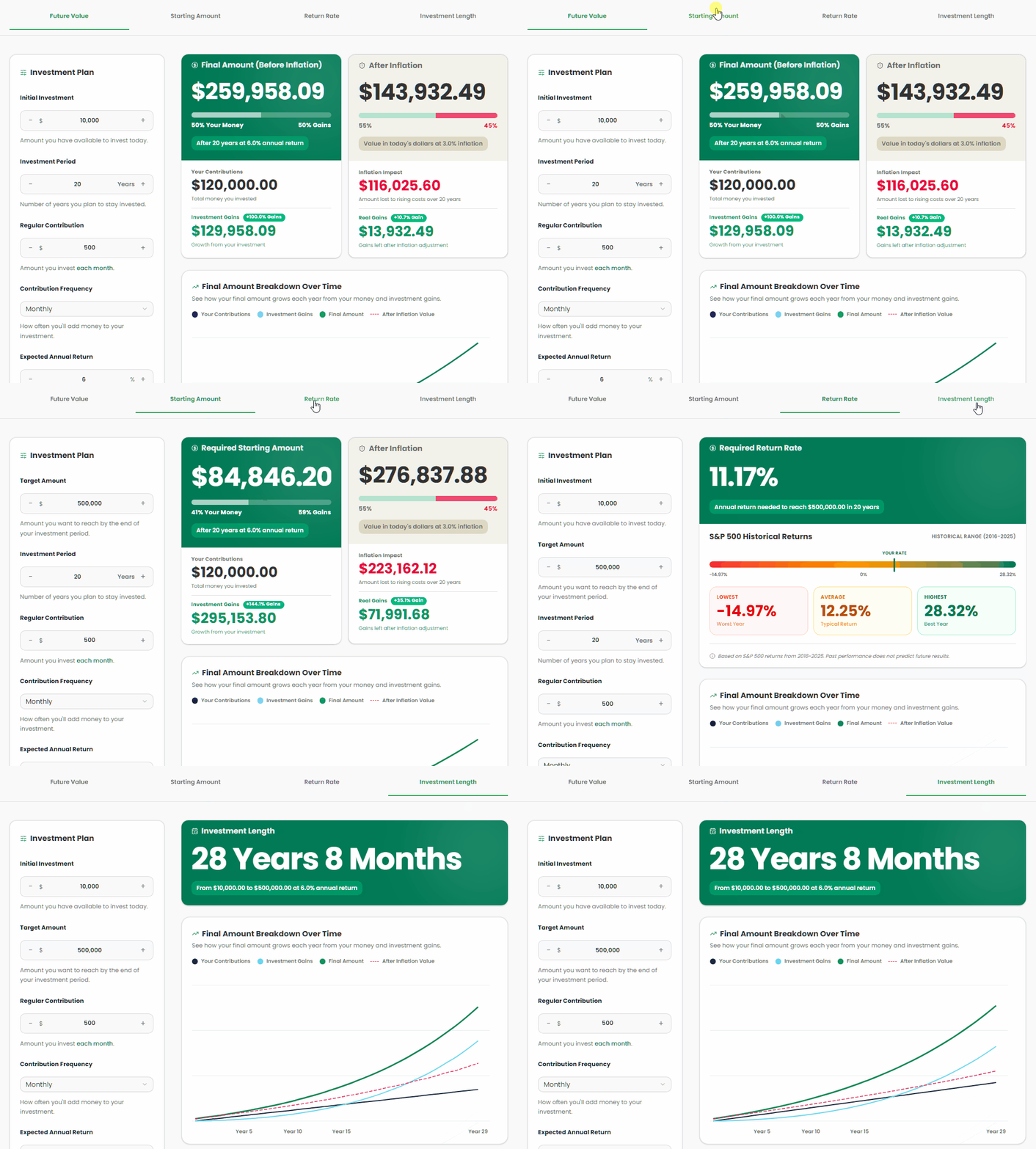
Switch between Future Value, Required Initial Investment, Required Return Rate, and Time to Goal, so you can solve for the number that matters most.
03
Designed for Long-Term Index Investors
Test different S&P 500 scenarios without switching tools: adjust contributions, returns, inflation, and timeline, then instantly compare results side-by-side.
What You Can Do With This Calculator
An S&P 500 calculator built for practical scenario decisions
Switch between Future Value, Starting Amount, Return Rate, and Investment Length to answer different planning questions.
Use it like a rate of return calculator or annual return calculator to test what return might be needed, with historical S&P 500 context shown for reference.
Model monthly contributions (and other schedules) to compare savings versus market gains over time.
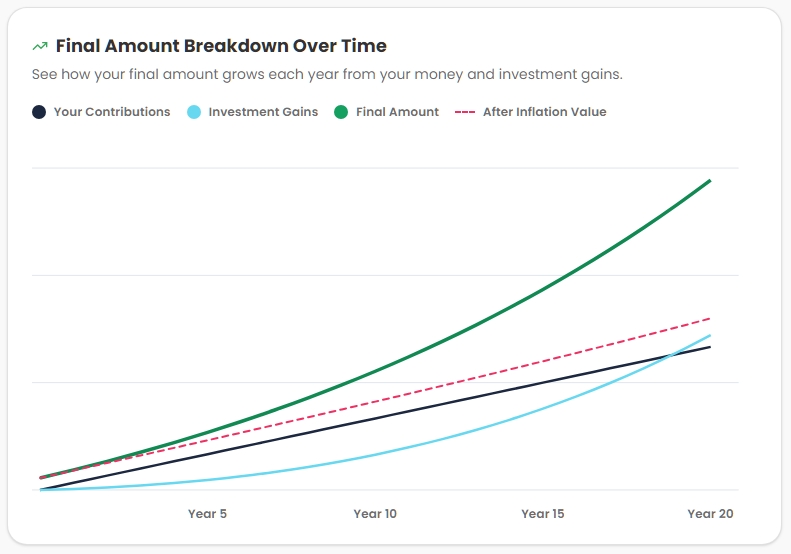
See a growth chart and a year-by-year table, so this investment over time calculator is easy to audit and explain.
Model a long-term index-fund scenario with assumptions you can review and change.
Add inflation to compare nominal growth with estimated purchasing power.
After you calculate, the URL captures your inputs so you can share the same scenario.
Built to keep inputs, charts, and the year-by-year table usable on smaller screens.
How to Use the Calculator
Three steps to model your investment scenario
Select Your Goal
Choose what you want to calculate:
- Future Value: Project your ending balance
- Required Initial Investment: Find how much to start with
- Needed Return Rate: Determine what annual return you'd need
- Time to Goal: Estimate years to reach your target
Enter Your Assumptions
Customize your scenario:
- Initial investment and target amount
- Recurring contribution and frequency
- Your expected annual return assumption
- Investment timeline (years)
- Inflation adjustment (optional): use 2%-3% for a simple real-return view, or 0% for nominal results
Analyze Results
Review detailed projections:
- Total contributions vs. investment gains to see where growth comes from
- Interactive growth chart to view trends over time
- Year-by-year breakdown to compare scenarios quickly
Research and guides
Understand the assumptions behind the result
Use these worked explanations to check return definitions, contribution timing, and costs before comparing scenarios.
S&P 500 Price Return vs Total Return
See how dividend treatment changes what an index return measures and how to avoid counting dividends twice.
Read the guide →How to Choose a Return Assumption
Compare lower, central, and higher fixed-return scenarios without presenting one rate as a forecast.
Read the guide →Beginning vs End-of-Month Contributions
Reproduce the timing difference with fixed inputs and compare the results over 10, 20, and 30 years.
Read the guide →How Investment Fees Compound
Measure how different annual fee assumptions change a hypothetical balance over longer holding periods.
Read the guide →S&P 500 Calculator FAQs
Understanding the calculator and its assumptions
What does this S&P 500 calculator do?
It calculates hypothetical growth from your starting amount, recurring contributions, fixed annual return assumption, and time horizon. It is an educational scenario tool, not a forecast or investment recommendation.
Can I model different return scenarios?
Yes. Enter different annual return assumptions to compare how they affect the result. The Yahoo Finance ^GSPC reference shown in the calculator is price return data and does not include dividends.
How accurate are these projections?
This calculator uses compound interest math, which is precise for the assumptions you enter. However, actual market returns vary year to year. Use this for scenario planning, not as a prediction of future performance.
What's the difference between the calculation modes?
Future Value: "If I invest X per month for Y years, what might I have?" Starting Amount: "How much do I need to start with to reach my goal?" Return Rate: "What return would I need to reach my target?" Investment Length: "How long will it take to reach my goal?"
Should I include inflation?
The optional inflation input converts the nominal final balance into estimated present-day purchasing power. Inflation is applied separately; subtracting it from the return input as well would count it twice.
Can I use this for VOO, SPY, or other S&P 500 index funds?
You can model a fixed S&P 500-style return assumption. Actual fund results depend on expenses, tracking differences, taxes, and dividend treatment. The calculator does not model a specific fund or recommend an expected return.
Does it account for fees, taxes, dividends, or inflation?
Inflation is an optional, separate adjustment to the nominal result. Fees and taxes are not calculated. Dividends are reflected only if your own return assumption includes them; no separate dividend payment is added. The calculator does not recommend a return input.
Can I see "what if I had invested $10,000 in the S&P 500" scenarios?
Yes. Set your starting amount to $10,000, recurring contributions to $0, choose the time period (e.g., 20 years), and enter the annual return assumption you want to test. The year-by-year table will show how the investment would grow under that assumption.
Can I save or share my results?
Yes. After running a calculation, you can copy the URL from your browser's address bar to share your scenario. Export to CSV/PDF is not currently available, but URL sharing allows you to bookmark and compare different scenarios.
Can I share or export results?
You can share the URL after you run the calculation. Exporting is not built in yet, but URL sharing still supports most portfolio return calculator comparisons.
Ready to Plan Your Portfolio?
Get year-by-year projections in under a minute. No signup required.